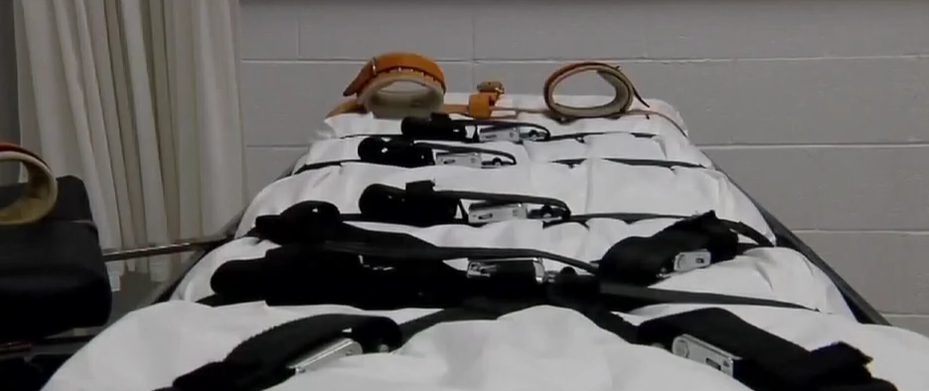
NASHVILLE, Tenn. (WOKI / WVLT) — A leading Tennessee anesthesiologist says a misplaced intravenous line could be the most likely explanation for why death row inmate Christa Pike survived a lethal injection that was intended to carry out her death sentence.
Dr. Paul Allen, a professor of anesthesiology at the University of Tennessee Health Science Center, said the details publicly released from Wednesday night’s failed execution point toward a medical complication known as infiltration, where medication is delivered into surrounding tissue rather than directly into the bloodstream.
The failed execution has prompted an independent review ordered by Gov. Bill Lee and renewed questions about Tennessee’s lethal injection procedures.
Medical Expert Offers Possible Explanation
Allen explained that the drug used in Tennessee’s execution protocol, pentobarbital, must enter the bloodstream through a properly placed intravenous line to work as intended.
If the needle misses the vein or punctures through it, the medication may leak into nearby tissue rather than circulate through the body.
“What happened here, I would suspect, is that they infiltrated the vein,” Allen said. “That means that the drug, instead of going in the bloodstream, went into the peripheral tissues in the arm or wherever they put the needle in.”
Allen emphasized that his assessment is based on witness descriptions and publicly available information, not any official findings from state investigators.
Complaints of Arm Pain May Be Significant
Witnesses reported hearing Pike complain about pain during the execution attempt.
According to reports, Pike said her arm felt like it was “about to burst open” and described throbbing sensations after receiving the injections.
Allen said those complaints are consistent with a drug being deposited into tissue instead of a vein.
The anesthesiologist said the misplaced medication could still be absorbed by the body and cause sedation, but not necessarily at the speed or concentration needed to produce death.
Why Pike May Have Appeared Asleep
Witnesses reported hearing Pike snore and appear extremely drowsy after she received two doses of pentobarbital.
Allen said that observation fits with his theory.
When pentobarbital enters surrounding tissue rather than the bloodstream, some of the drug can still eventually be absorbed. However, the medication may not reach a sufficient concentration in the bloodstream to have its intended lethal effect.
That could help explain why Pike appeared sleepy and unresponsive but remained alive after the injections.
Vein Access Can Become Difficult
Allen noted several factors can make establishing IV access challenging.
Dehydration can make veins more difficult to locate, while prior medical conditions or vein damage may also complicate the process.
“Not eating and drinking would make finding the vein and getting into the vein more difficult,” Allen said. “If she had bad veins to begin with, that were from either substance abuse or something of that nature, then it would be difficult to cannulate her vein.”
Pike’s attorneys previously argued in court that she suffered from a vein condition that could complicate a lethal injection.
State Review Continues
The Tennessee Department of Correction has said staff followed every step of the state’s approved execution protocol. Officials have not identified a cause for the failed execution.
Gov. Bill Lee has ordered a comprehensive third-party review and suspended Tennessee’s remaining scheduled execution for 2026 while investigators determine what happened.
Meanwhile, Pike remains hospitalized and receiving medical treatment.
Her legal team said she is alive but has not released additional information regarding her prognosis.
The outcome has sparked new legal challenges and intensified debate over the future of Tennessee’s death penalty system.