NASHVILLE, Tenn. (WSMV) – Update (3 p.m.): Tennessee Gov. Bill Lee has officially signed into law the new congressional map in the state after Republican lawmakers passed legislation during a special session.
Update (2:13 p.m.): Tennessee Democrats are reacting to the passing of new congressional maps that will go into effect for the 2026 August primary once Gov. Bill Lee signs the measures from the House and Senate that were passed on Thursday.
Meanwhile, U.S. Sen. Marsha Blackburn, who’s running to replace Gov. Bill Lee in the state, is praising the move from Tennessee Republicans:
Earlier (1:21 p.m.): The Tennessee Senate has voted to pass the new congressional map dividing Memphis, mirroring the actions the House took earlier on Thursday, during the third day of the special session.
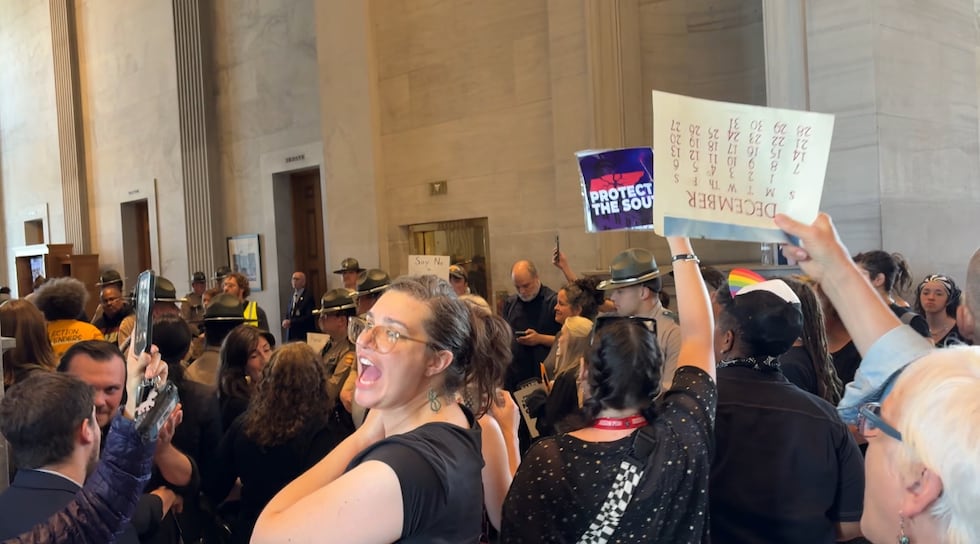
As protests ring out at the Tennessee State Capitol on Thursday, the House approved the new congressional map that will split up Memphis.
As the House wrapped up its session on Thursday, protesters erupted in the chamber.
The Senate is now reviewing the proposed changes to the map and is expected to vote on it shortly.


“Memphis is not Williamson County; Memphis is not a puzzle piece to be stretched across this state. Our communities are real with shared struggles, shared pain, shared dreams,” said Sen. Raumesh AKbari (D)-Memphis.
Sen. John Stevens (R-Huntingdon) said, “The map was drawn to maximize the republican chances to win nine congressional district seats in the upcoming mid-term elections.”
Sen. Jeff Yarbro (D-Nashville): “District 9 takes about 270,000 citizens of Memphis and about 70% percent of those residents are black. But district 8 takes 440,000 citizens of Memphis and Shelby County. 27% of those are black. 72% of the white population is put into one district. 75% of the black population is carved into two. We are being asked to believe it’s just the luck of the draw. Just happenstance.”
Earlier: House Republicans are pushing toward redrawing congressional districts in Tennessee after passing bills that would curb statutory hurdles from doing so during this special session.
During the House floor session on Thursday morning, Democrats introduced a slew of amendments to curb what Republicans say will allow for the new proposed map to “represent conservative values” in Washington, D.C.
“The map…was drafted based on the census, the population related to the last census, but it was absolutely drafted on politics…based on court rulings, this gives us a unique opportunity to, for the first time in history, to have an all-Republican delegation sent from Tennessee to Washington D.C. to represent conservative values. To represent conservative principles,” explained Rep. Jason Zachary (R-Knoxville)on the House floor. “This gives us a historic opportunity, so we’re taking advantage of that as the supermajority in this body. So, that’s why we’re doing it.”
Amendments from Democrats were voted down over and over again during the session until Republicans finally passed bills that removed a state law barring lawmakers from changing congressional districts between census apportionments.
That now heads to Gov. Bill Lee’s desk for his signature.
Below is a look at the bills passed so far:
- HB 7005: As introduced, makes appropriations sufficient for the payment of any lawful expenses of the second extraordinary session of the 114th General Assembly; makes other appropriations related to such extraordinary session.
- HB 7002: As introduced, removes prohibition on changing congressional districts between apportionments.
- HB 7001: As introduced, suspends application of the requirement that candidates for United States house of representatives meet the residency requirements for state senators and representatives contained in the Tennessee constitution for the 2026 election.
Democrats continuously pushed back against this special session and the amendments paving the way for Republicans to enact the proposed new district map.
Look at the previous and new maps below:
The old map:

The new map:

Gov. Bill Lee called a special session to redistrict after a decision by the U.S. Supreme Court last week stripped out a key provision of the 1965 Civil Rights Act, which allowed, and sometimes required, states to use race-based data to draw their congressional maps to protect representation for minority voters.